You can’t directly delete negative reviews, but you can remove them by reporting policy violations, flagging fake or misleading content, or appealing through each platform’s moderation process.
There’s never been a more important time to clean up your business reviews. Ratings have always influenced where you rank and who customers choose, and that still holds true. But now the stakes are higher, the AI tools are using those same reviews to recommend businesses. If your reviews are not working in your favor, you are falling behind.
How to Handle Bad Online Reviews
Receiving a negative online review is never easy, whether it’s from a customer, client or a current/former employee. Even worse, when it’s a fake misleading review.
Once you got a bad review, you have several options:
- Try to resolve the issue offline, a person might eventually remove it.
- Respond to the review with an explanation.
- Flag and appeal the review to network’s moderators to take it down.
- Contact the network if you believe that your business is under attack (such as viral events or scam)
In this blog post, we’ll help you navigate through the tough decisions involved in responding to negative reviews and finding the best solutions. You’ll learn how to report, appeal, and remove bad, misleading, or fake reviews, write effective responses, avoid mistakes, and even turn negative reviews into opportunities.
Claim Your Business Profiles and Start Managing Reviews
Before you start managing, reporting, and removing reviews, it’s important to claim your business profile on each network. By doing this, you take ownership of your profile page visible to customers on those platforms. Once you claim it, you can log in, update your profile with important information such as photos, logos, descriptions, website, business hours, and more. This will enable you to effectively manage existing and new reviews.
Additionally, claiming your profiles protects you from scammers and spammers who might take over your profiles or create duplicates.
Can You Appeal and Remove Negative Reviews for Your Business?
Yes, most major review platforms allow you to flag and appeal reviews that are unfair, misleading, or violate their guidelines. The process varies by platform but is usually straightforward.
In fact, Google has strict rules against websites that charge for removing content or make it hard to appeal. If a review site demands payment to remove reviews or builds obstacles on appealing and removal process, you can report it to Google and request that Google remove their pages about your business from search results. Because of this, legit review platforms aim to keep their appeal processes clean and transparent to maintain strong positions in Google search and avoid any legal consequences.
How to Report and Remove Online Reviews
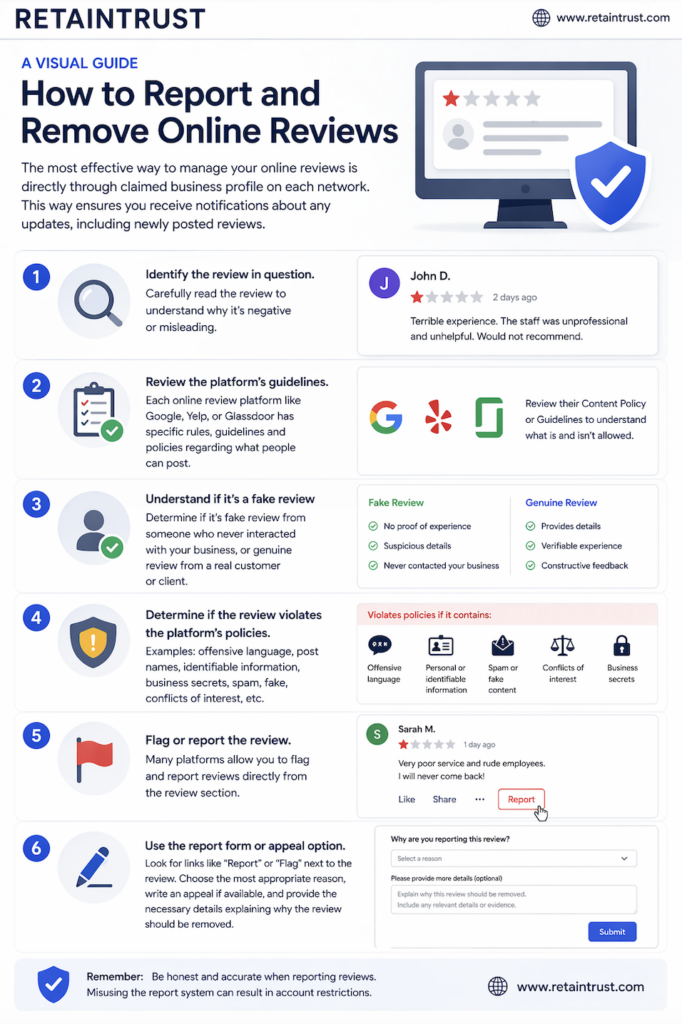
The most effective way to manage your online reviews is directly through claimed business profile on each network. This way ensures you receive notifications about any updates, including newly posted reviews.
- Identify the review in question. Carefully read the review to understand why it’s negative or misleading.
- Review the platform’s guidelines. Each online review platform like Google, Yelp, or Glassdoor has specific rules, guidelines and policies regarding what people can post when reviewing businesses, products or services.
- Understand if it’s fake review from someone who never interacted with your business, or genuine review from a real customer or client.
- Determine if the review violates the platform’s policies (for example, contains offensive language, post names, identifiable information, business secrets, spam, fake, conflicts of interest etc).
- Flag or report the review. Or use contact box or link to write to moderators.
Many platforms allow to flag and report reviews directly from the review section.
Look for links like “Report” or “Flag” next to the review, click the link, identify the most appropriate category why you are flagging the review, and write an appeal if there is an option. Provide the necessary details explaining why the review should be removed.
Quick Summary on How to Remove Online Reviews
- Identify if review violates guidelines
- Flag/report it
- Submit appeal
- Follow up
- Respond if not removed
Types of Online Reviews You Can Flag and Report
Each review network has it’s own rules and guidelines on what can be posted about businesses, products or services. Here is the most common rules most network follow:
- Offensive content, profanity. Reviews that contain offensive language, threats, violence, hate etc.
- Spam and fake reviews. Content that is not real or unrelated.
- Conflict of interest, when someone is affiliated with business or competitors.
- Illegal content. Reviews that contain illegal content or any illegal references.
- Off topic reviews that have nothing to do with business, products, or services.
- Buying, harassment, or identifiable information. Reviews that personally attacks specific individuals.
- Trade secrets, confidential information. Reviews that disclosure non public information about business.
- Accusations of illegal activity. If true, it needs to be reported to authorities, and not review sites.
- Personal Information such as address, phone, email.
Use common sense and see if the review negative but still genuine, and replying to that review actually makes sense. Or it is review that designed to harm your business and needs to be reported.

How to Improve Your Chances of Removing Negative Reviews
When you trying to flag and appeal negative review, it goes to moderators and there are strategies how you can present a better case to successfully appeal a review. Here are key tips to improve your chances of flagging and appealing negative reviews:
- Understand Platform Policies and Guidelines
Before taking any action, familiarize yourself with the review platform’s rules and guidelines regarding reviews. Each platform (such as Google Reviews, Yelp, TripAdvisor) has specific rules what can be written in the review. Understanding these guidelines increases your chances to get your review successfully removes - Timing Matters, When to Report a Negative Review Wisely
Take a breath and take some rest, don’t rush into reporting a negative review immediately. Writing an emotional appeal talking about its injustice, may not convince moderators. To win their support, focus on providing clear evidence that the review not only unjust but also violates the network’s rules and guidelines. Also, removing the review right away might prompt the reviewer to write a carefully worded new review that evades flagging. It’s often better to let them “cool off” before taking any action. - Build Strong Online Reputation and Positive Reviews on a Regular Basis
Anecdotally, businesses with a positive image and lot of good reviews often find that moderators take more time to review their appeal and are more inclined to agree with them, whereas those with a poor reputation may receive less support from the network. - Don’t Overwhelm Moderators With Too Many Requests to Remove Reviews
Making frequent requests and appeals to remove reviews for your business could backfire, moderators may start to ignore your requests, just like the “Boy Who Cried Wolf” story. Some networks may even go as far as banning your business profile if they perceive your actions as spamming. - Not All Negative Reviews Should be Flagged or Appealed
Flag only reviews that clearly violate platform guidelines, such as those containing hate speech, false information, or personal attacks. If the review is negative but well written and provide productive criticism wishing you and your company well, it’s better to keep it and respond professionally. It’ll show that you are willing to provide the best support and improve. A few negative reviews can be turned into your advantage. - Document Evidence for Appeals
Gather evidence to support your claim. This might include screenshots of inappropriate content, email correspondence with the reviewer, or proof of ilegal activity. - Follow Platform-Specific Appeal Procedures
Some review platforms have its own appeal process when your first flagging attempt was denied. This often involves filling out an appeal or contact form and providing additional information. Clearly explain why the review should be reconsidered and removed. - Stay Professional, Transparent, and Don’t Lie
Maintain professionalism through the flagging and appeal process. Avoid engaging in heated exchanges with moderators or responding defensively to negative reviews. Don’t engage in heated exchanges (online and offline) with people who wrote the review. Some networks contact the reviewer and your communication can be presented as an evidence on their side.
By understanding platform policies, responding promptly and professionally, and following proper appeal procedures, businesses can improve their chances of removing the negative reviews by network’s moderators.
How Long Does It Take to Remove a Review?
Each network has different rules. Some networks would review and respond within a few business days. Others will take time to investigate and even contact a person who wrote a review for an evidence.
For example, once you flag a review on Google Maps, it takes approximately 2-4 business days for moderators to review and make a decision if the review violates Google’s rules and should be removed. At the same time, Capterra and other Gartner networks like Peer Insights, Software Advice or GetApp will contact you and the person who wrote the review and gather more evidence, the whole process can take days and even weeks for final decision.
Can a Removed Negative Online Review Reappear?
When a review violates rules and community guidelines, any network typically delete it permanently after you appeal. This applies across different review platforms.
But, most networks inform the reviewer via email when their review was removed for guideline violations. Unfortunately, this might prompt an unhappy customer, client, or employee to write a new review, often more carefully written to prevent another removal in the future. Platforms like Reddit and Quora have many discussions where users express frustration when their reviews are taken down, and they share tips with each other on how to write compliant reviews that remain posted and impossible to challenge.
What to Do If a Review Can’t Be Appealed? Turning Negative Reviews into an Advantage
Not every negative review can be removed even after several attempts to appeal. Some of them are well written and organized, don’t violate any rules or guidelines, and describe genuine experience with your business. Here how you can still take advantage and show customers and partners that you care and provide the best response possible.
- Respond professionally, even try offline resolution. Professional responses to each review, positive and negative, can show that you care about customer feedback and are proactive in addressing any concerns.
- Use negative feedback to learn. Make necessary improvements and let everyone know about the changes you’ve made, write a review response.
- Encourage positive reviews from satisfied customers. This can help to push down the negative reviews and improve your overall rankings.
Remember, a few negative reviews, especially those offering constructive criticism and suggestions for improvement, won’t harm your business. In fact, they can demonstrate to customers that you are committed to delivering excellent service, continuous improvement, and taking their feedback seriously. Moreover, established businesses without any negative reviews might raise suspicion among customers who value diverse opinions from previous customers. They might even think it’s “too good to be true” and question whether the business is intentionally suppressing genuine reviews.
Can I Pay or Sponsor the Network To Remove Bad Reviews?
Yes and no, some networks will push down or bury negative reviews to the bottom by giving priority to good ones. However, most networks won’t do it and rank paying customers the same way like everyone else.
For example, on Glassdoor, paying customers can enhance their profiles and have the option to hide competitors’ job postings or suggestions. Sponsoring on Glassdoor does not affect review management or increase the likelihood of review removal. Similarly, on Capterra, paying for increased visibility for your software product will drive more traffic (PPC model) but will not influence the removal of reviews.
Identifying Patterns in Negative Reviews to Improve Your Reputation
When managing, flagging, and removing reviews, it’s great to identify patterns and pinpoint the source of the most negative feedback. This approach allows business owners to address operational issues and prevent similar complaints in the future. Similarly, recognizing specific strengths that customers appreciate can help highlight these aspects in marketing materials and attract more positive reviews.
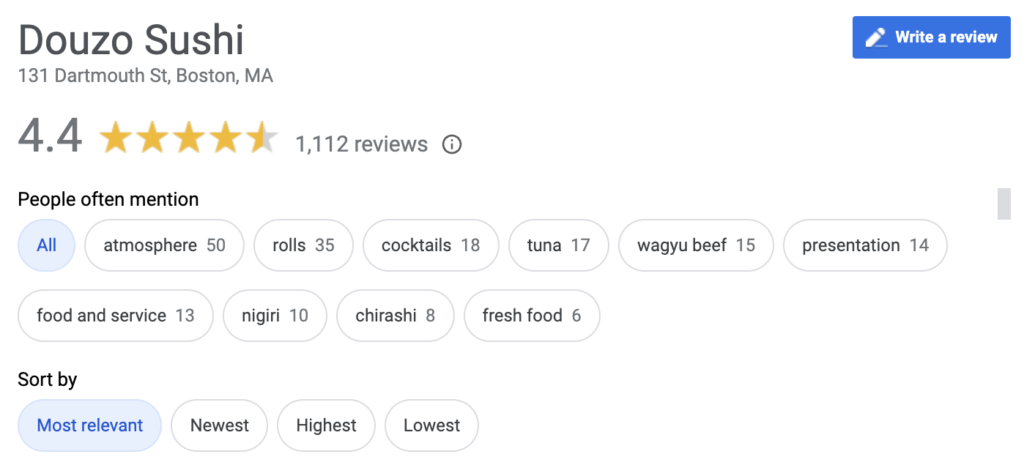
As seen in the screenshot, Google provides review breakdowns by service or product for various industries, it’s called “People Often Mention” section. In the case of restaurants, owners can use this data to identify the source of negative feedback. For example, while many reviewers might praise the restaurant’s atmosphere, negative comments might focus on a particular dish.
Mistakes to Avoid When Handling Negative Online Reviews
By avoiding these mistakes, businesses can manage negative reviews more effectively and improve their reputation:
- Asking customers not to write and discouraging reviews, it can backfire.
- Being overly defensive in your replies can escalate and alienate customers.
- Making arguments or trying to justify yourself in response to negative reviews usually makes the situation even worse.
- Threatening legal action against reviewers or the platform is counterproductive.
- Posting positive (fake) reviews for your own business or asking employees to do so, it can damage trust.
- Using multiple profiles to manipulate reviews violates network terms.
- Paying for positive reviews, same as posting your own, is unethical and can lead to penalties from review platforms.
- Submitting too many removal requests at once can overwhelm the platform’s review team and influence their decision not in your favor.
Bottom line, using common sense is the key to handling reviews effectively and avoiding most mistakes that can backfire.
Example of How a Mistake in Handling a Negative Review Led to Escalation and Reputation Damage
Handling reviews requires careful consideration, as a single mistake can escalate conflicts and attract even more negative feedback crashing ratings. For example, a wedding services business faced an issue when an unhappy couple left a negative review on Google and tagged the business in angry Instagram post. The business owner believed he was not at fault and that the couple was, in his words, “cheap” and received more value than they actually paid for. Responding defensively and emotionally, calling them “cheap”, the owner provoked the couple to post more negative reviews on Instagram and spread their negative feedback to other platforms like Yelp, Trustpilot, Pinterest, and Facebook.
As a result, both the bride and groom, along with their family and friends, left numerous reviews across various networks, leading to a significant drop in the business star ratings. This example shows how not to handle negative reviews and highlights the importance of avoiding quick, emotional responses.
Online Reviews Importance by The Numbers
Online reviews can make or break how people see your business. They shape first impressions, influence decisions, and often determine who gets chosen. Paying attention to what is being said, responding when it matters, and reporting reviews that break platform rules can go a long way in protecting your reputation.
According to Forbes, over 90% of consumers read online reviews, and 75.5% of them trust these reviews when making purchase decisions.
Reviews can play a crucial role in a business’s success, especially when attracting top talent. In fact, according to studies, 70% of the strongest candidates won’t accept a job offer from a company with bad ratings and reviews on platforms like Glassdoor.
For B2B sales, research indicates that 7 out of 10 B2B buyers conduct research before contacting a company’s sales department to initiate the purchasing process.
Many business owners find managing and replying to online reviews time consuming. However, the data and research provided make it clear that prioritizing the management and response to online reviews, including flagging, reporting, and deleting bad and fake reviews, is highly important for business success.
Strong online reviews can act like a built-in salesperson for your business, driving higher conversions and even helping you spend less on marketing.
Types of Websites That Publish Online Reviews
There are many types of online platforms collect and display reviews. Beyond dedicated review sites, social networks, forums, discussion boards, and even blogs with comment sections can serve as venues for users to share their opinions about businesses, products, and services. Many of these sites rank well on search engines like Google, meaning they often appear in search results when people search for business names or compare products or services.
Here are the most common places for online reviews:
- Business directories, Local and Maps, like Google My Business (Google Maps) or Yelp where businesses are listed, and customers and clients can rank them and leave reviews about experiences.
- Retail websites and platforms like Amazon, eBay, Walmart and other e-commerce sites where customers can review products they purchased and their interaction with businesses.
- Travel review and booking websites like TripAdvisor, Expedia, Booking.com, Airbnb, and others where travelers can review hotels, hosts, restaurants, and other travel related businesses and service providers.
- Social media networks Facebook, Instagram, or Twitter where users allowed to leave feedback and reviews on business pages.
- Job networks and review sites like Glassdoor or Indeed where current or former employees, people who interviewed with the company, can review their employers, interview process and share their experiences.
- Popular Discussion Boards and Communities. Sites like Reddit, LiveJournal, Pinterest, or Quora where users create interest group and discuss different topics.
- Online complaint sites where customers can express their dissatisfaction with products or services they purchased, like RipOff Report or Better Business Bureau (BBB).
- Niche websites that focus on specific industries, like Capterra or G2 for software buyers, local services Angie’s List, DealerRater for car buying experience.
- GenAI platforms, they don’t collect user generated content but scan other websites and display reviews and ratings in their recommendations.
How AI Platforms Are Shaping the Impact of Online Reviews
AI tools like ChatGPT and Google Gemini don’t just pull information from websites anymore. They also learn from patterns in reviews, ratings, and overall reputation signals to shape their answers and recommendations. That means online reviews now influence not only what people see on search platforms like Google, but also what AI suggests directly. As more people turn to AI for quick answers and recommendations, your reviews play a bigger role in how your business is perceived and chosen.
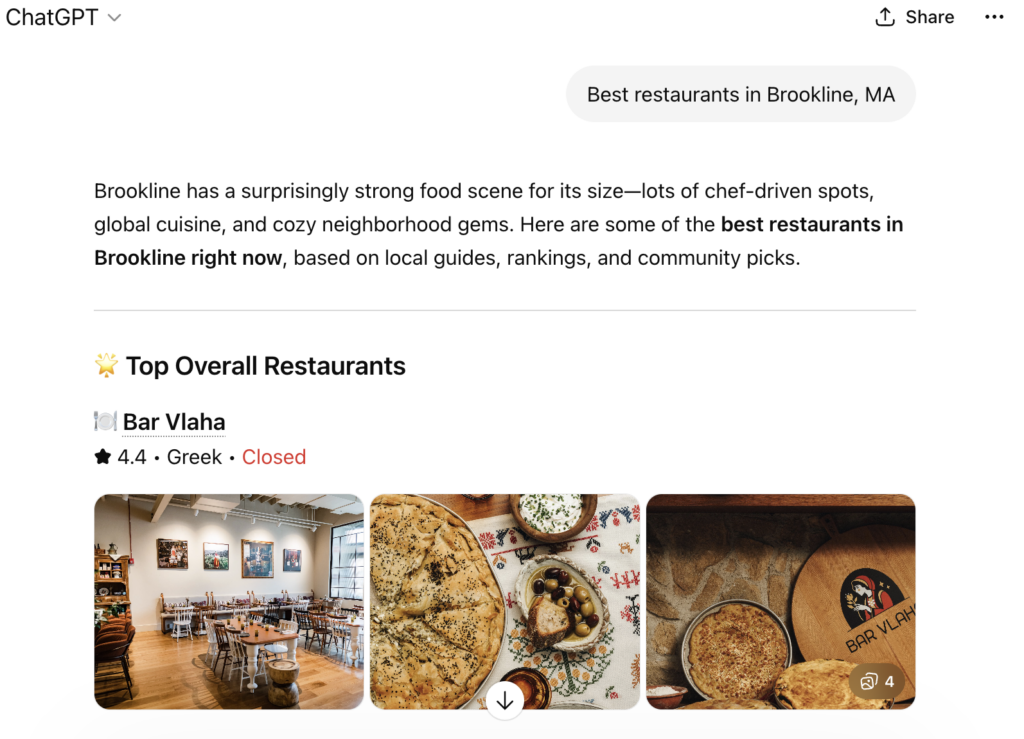
ChatGTP for example, gives results for best restaurants in a local area and links to popular review platforms with star rankings.
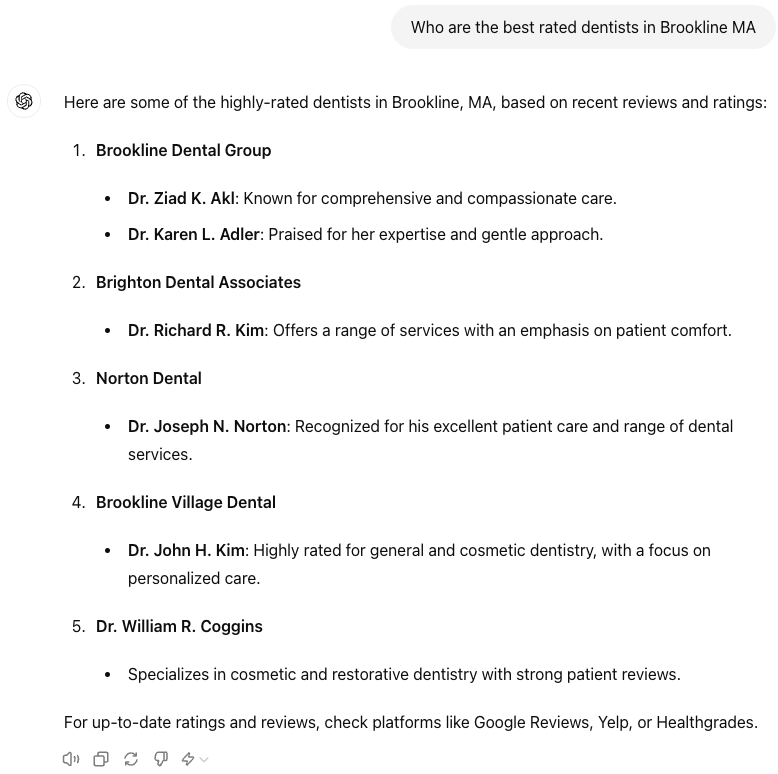
At the same time, ChatGPT gives review suggestions for Google Reviews, Yelp, and HealthGrades when searching for local doctors.
Who Can Write Online Reviews?
Online reviews can be written by anyone who interacted with your business, including clients, customers, employees, or anyone who has used your products and services. However, due to the anonymity of the internet, even people who are unfamiliar with your business can write reviews as well. This anonymity is often exploited by “bad actors” such as spammers, scammers, trolls, or disgruntled employees.
- Customers. People who share their experiences with products or services they purchased from businesses.
- Unhappy customers are seven times more likely to leave a negative review.
- Clients and business partners. People can write reviews about professional interactions and collaborations with the business owner, employees, or customer support.
- Employees. Current and former employees can review their employment experience, provide insights into the work environment, what to expect and company culture.
- Competitors, spammers, scammers, and trolls. Unfortunately, competitors or individuals with malicious intent can also leave reviews, which can sometimes be fake and misleading. Here report revealed that over 23% of online reviews are fake and only 54% can be trusted.
- Motivations behind fake negative reviews can be anything like competitors, extortion attempts, disgruntled employees, and or personal vendettas.
Why Are Policy Violating Reviews Still Approved and Visible on Review Sites?
Believe it or not, only a few review sites have strict manual review approval systems that include both manual and automatic verifications. Unfortunately, many platforms rely heavily on automatic approval processes and depend on users to report problematic and questionable reviews. This approach led to many controversies and even prompted the FTC to address the issue by working towards banning fake reviews and misleading feedback, question still remains if it’s possible and how it will be enforced.
Even on networks with strong approval rules, businesses must actively manage and report reviews. Many reviews can be on the edge of violating community guidelines and can be subject to interpretations. These reviews require multiple submissions and appeals to convince moderators that they indeed breach the rules and should be removed.
Example of a Negative Inappropriate Review on Google Maps
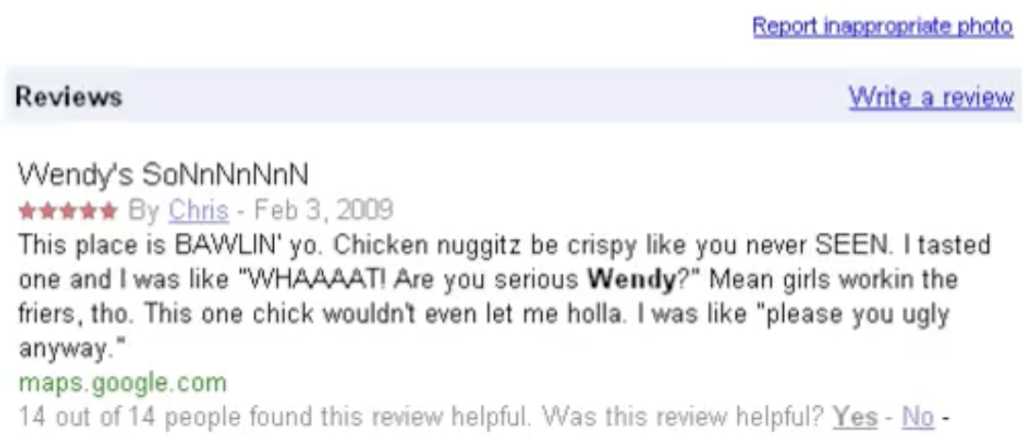
This review from a long time ago, it was totally inappropriate and stayed on Google for years. It even got voted as “helpful” by dozens of people.
Is It Ethical to Report and Delete Bad Online Reviews?
People often question whether removing reviews is fair. After all, free speech matters. Most platforms allow businesses to respond to reviews and flag the ones that break the rules. Challenging harmful or misleading feedback is a normal part of protecting a business.
That said, not every negative review should be removed. Honest feedback even when critical, is part of running a business. The better approach is to respond professionally, learn from it, and encourage more good reviews over time.
Building a Positive Online Reputation Before Bad Reviews Strike

Dealing with negative content involves continuously managing your reputation. This approach ensures that when negative reviews arise, the positive feedback you have accumulated over the years can outweigh a few bad reviews or content, minimizing their impact.
To achieve this, businesses should:
- Encourage Positive Reviews. Actively ask satisfied customers to leave reviews across various platforms. Stronger reputation means higher chance of getting negative reviews removed because moderators
- Respond to Negative Feedback. Address negative reviews and content promptly and professionally, showing great service and support.
- Report and Remove Old Reviews. Make sure to flag outdated or inaccurate reviews (even from years ago), seeking their removal to maintain current and accurate perceptions. Remember that old reviews still affect the overall star ratings.
Leveraging search engine optimization (SEO) is crucial:
- Optimize Positive Content. Regularly publish quality content that showcases your positive customer experiences, making sure it ranks well in search results.
- Monitor Search Results. Continuously monitor search engine results to manage and promote positive content, effectively overshadowing any potential negativity.
By integrating these strategies, businesses can build a strong online reputation that can withstand even some negativity that might arise in the future.
Conclusion. The Reality of Removing Negative Reviews
Removing negative reviews is possible but it is not guaranteed. Some reviews are fake or clearly cross the line and can be taken down with the right approach, but others stay no matter how frustrating they are. That is simply how most platforms are designed.
The process itself is often less about a single action, it’s more about paying attention. Over time, the goal shifts and it becomes less about removing every negative review and more about managing the overall picture. A business with a strong reputation can absorb a few bad reviews without real damage.
Looking ahead, reviews are only becoming more influential. They are no longer just what people read by scrolling through listings. They are being picked up, summarized, and ranked by AI that influence decisions before customers even visit a business. That means every review, good or bad, carries more weight than it used to.