
Since ChatGPT began displaying sources and linking to websites, it has become a place for finding businesses, services, and recommendations. As businesses began noticing traffic from AI platforms, and racing to be recommended, they quickly realized something familiar. The process looks a lot like traditional SEO used to rank on Google and other search engines. Generative Engine Optimization (GEO) builds on those same foundations, with a few differences.
I recently talked with a marketing expert running digital marketing for a new startup. He mentioned that once their website started gaining popularity and rankings on Google, it didn’t take long before they noticed their first traffic from ChatGPT.
ChatGPT Ranking Cheat Sheet
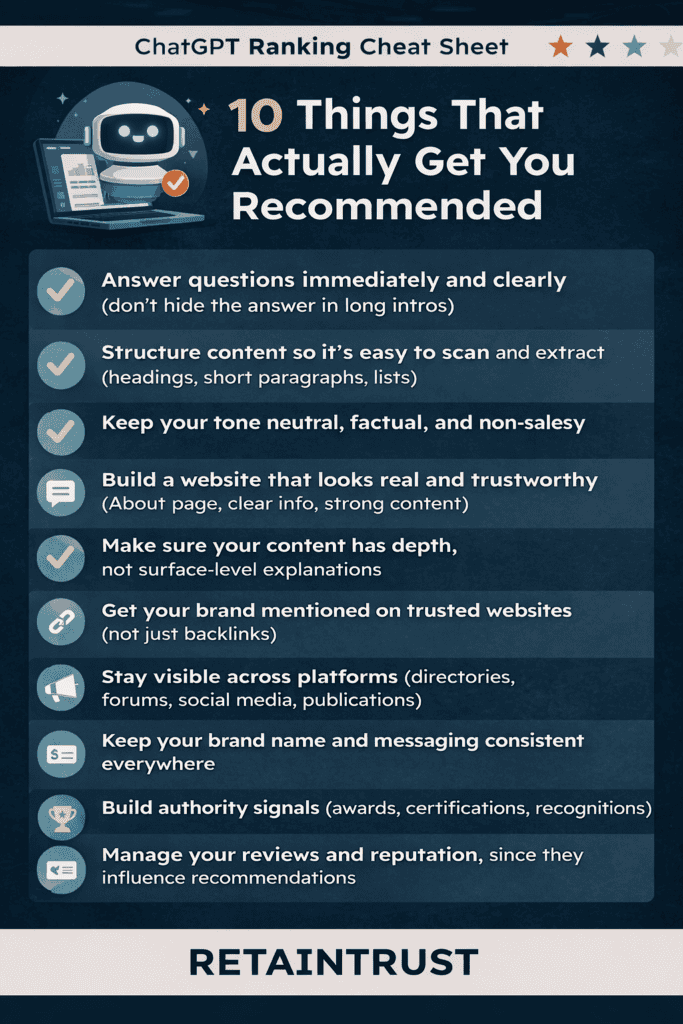
This cheat sheet breaks down the 10 things that actually move the needle when it comes to ChatGP rankings. From how you write content to how your brand shows up across the internet. If your content is hard to scan, too salesy, or lacks authority signals… you’re falling behind.
How ChatGPT Learns and Makes Recommendations
First, it’s important to understand how ChatGPT works. It’s trained on mix of data, including books, publicly available websites and content, and other sources. This helps explain why many of the same principles marketers use for SEO still apply when trying to get visibility in AI recommendations.
At the same time, it’s worth clarifying, ChatGPT doesn’t continuously retrain (scrape) on live internet data. It’s updated periodically, and its knowledge reflects information available up to a certain point in time. However, when when users specifically ask questions to search the web, it can scan more current information, including news sites, blogs, and social media.
For marketers, this means two things. First, your content may not appear immediately and you need to be patient. Second, when models are trained or a real-time search is used, factors like content quality, authority, and visibility across the web still play a major role, just like how how it works on Google.
Therefore, optimizing for ChatGPT isn’t something new. It closely resembles traditional SEO, where credibility, consistency, and distribution across trusted sources increase the chances of being recommended, but with a different interface.
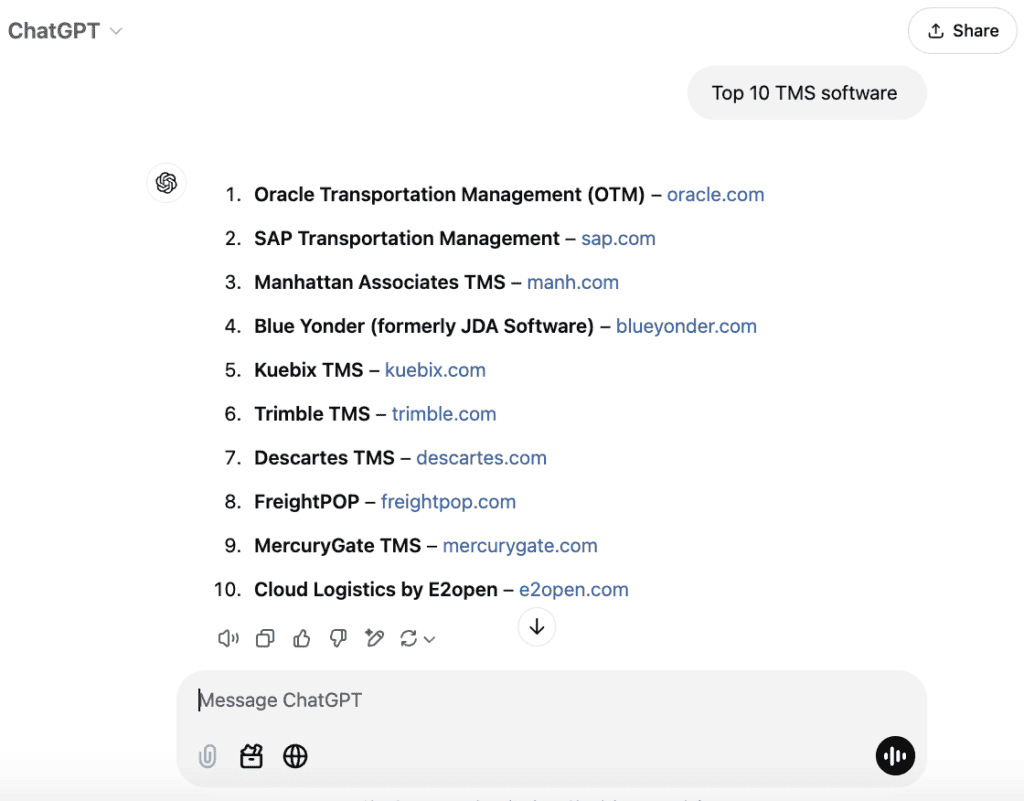
The Key Factors That Get Your Website Recommended by ChatGPT
If you want your website to show up in ChatGPT, it all comes down to the basics done well. That means having a clean, well-organized website with quality content (just like SEO), getting mentioned on reputable websites (just like SEO as well), showing up in news or publications (strong PR work), staying active on social media, and building a presence on review platforms. Also, strong rankings on search engines like Google helps.
Build a Website That ChatGPT Can Easily Reference
If you want your website to show up in ChatGPT, it starts with how your site is built and how your content is written. ChatGPT tends to favor content that directly answers questions, direct definition, balanced tone, is easy to parse, and comes from credible sources. That means getting to the point quickly instead of burying the answer halfway down the page is the key.
If your page title is “How to Optimize a Website for AI”, you should have an answer within the first two paragraphs instead of starting with a long introduction like “why it’s important to optimize your business for AI”.
Credibility Matters
Your website needs a strong “About” and/or “Our Team” pages, with clear explanation of what you do, real company details. The more your site feels like a legitimate established source, the more likely it is to be referenced.
And finally, depth wins. Your key pages like services, blog posts, resources should actually cover the topic. The goal is simple, when ChatGPT looks for an answer, your site should feel like an obvious place to pull from.
Your site also needs to be easy to navigate and have a good sitemap.
Build Visibility Beyond Your Website
This is where AI optimization is similar but different from traditional SEO. It’s not just about getting backlinks, it’s about what reputable sources actually say about you. No need to have a backlink, a mentioning is enough to get noticed.
Make sure to appear on the websites ChatGPT cites most often. For example, according to RecoverReputation, Reddit, Wikipedia, TechRadar, CNET, PCMag, and others are among the most cited sources.
ChatGPT looks at how your business is mentioned elsewhere. That includes articles, directories, forums, and social media. The more your brand shows up in credible places, more likely you’ll be recommended.
Social media plays a role too. Active profiles, lot of followers, sharing and messaging across different platforms plays a big role.
Why Brand Mentions Matter More Than Backlinks
Traditional SEO made everyone to chase backlinks. They still matter, but AI engines like ChatGPT care more about how your brand is mentioned even without a link. So, no need to call an editor (like I did before) asking to add a link the network forgot to include when mentioning your business.
For example a mention in a Reddit discussion, listing in an industry directory (no need to sponsor your listing to get a clickable link), review profile on a trusted platform, or a quote in a blog or article… none of these need to link back to your site to have value.
What matters, your business name is consistent, it is relevant to what you do, and the sources are credible. It’s enough to appear in ChatGPT more often.

Awards and Recognition to Build Authority
Awards, certifications, and recognitions carry more weight in AI search than many people expect, often even more than in traditional SEO. If you or your business has earned them, make sure they’re clearly visible on your website, whether on your homepage, About page, or a dedicated Awards section.
Be specific and include the awarding organization, dates, and details. ChatGPT can pick up on this and cross-reference it with the sources.
Manage Your Reputation and Review Sites
Your online reputation matters, a lot! Stay on top and make sure your business shows up positively across review sites. If something negative or fake appears, report it when you can, and respond calmly and professionally if negative review can’t be removed.
ChatGPT also pulls content from review platforms like Google, Trustpilot, Yelp, Glassdoor, Indeed and others. It can summarize overall sentiment, highlight pros and cons, and even show average star ratings when recommending businesses… and sometimes influencing how different options are compared or ordered.
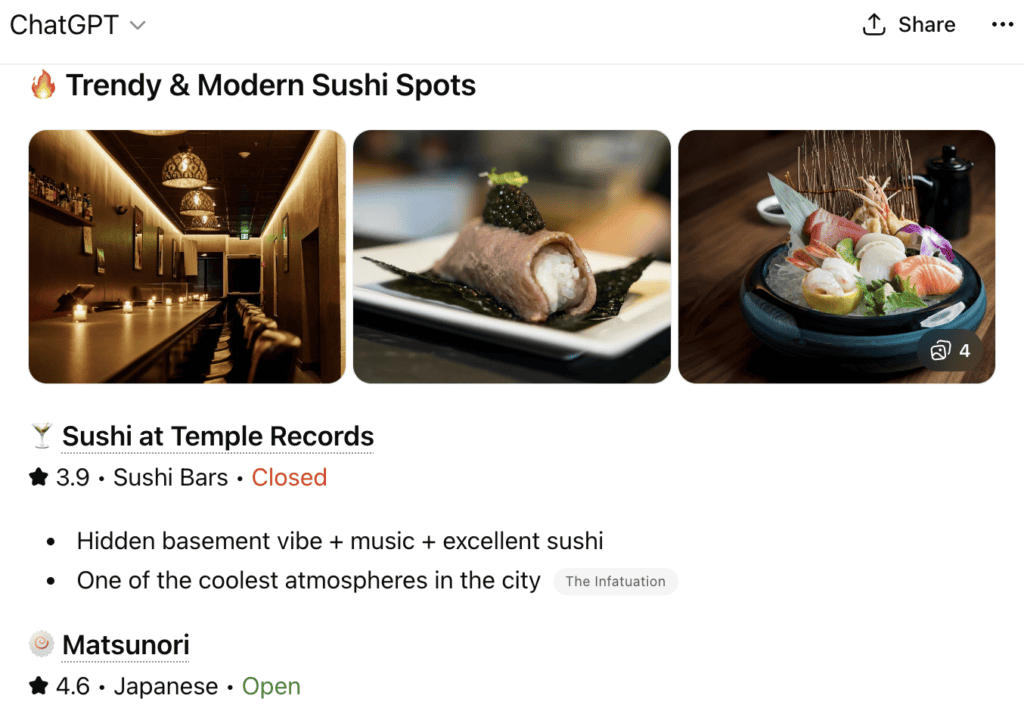
ChatGPT results often include review highlights and star rankings just like in the screenshot above.
Target Niches, Locations, and Categories Clearly
Be specific about what you do and where you do it. If your business operates in multiple locations or offers specialized services, make that clear on your website. Create pages for each location, service, or niche instead of trying to cover everything in one place. This makes it easier for ChatGPT to match your business to specific requests.
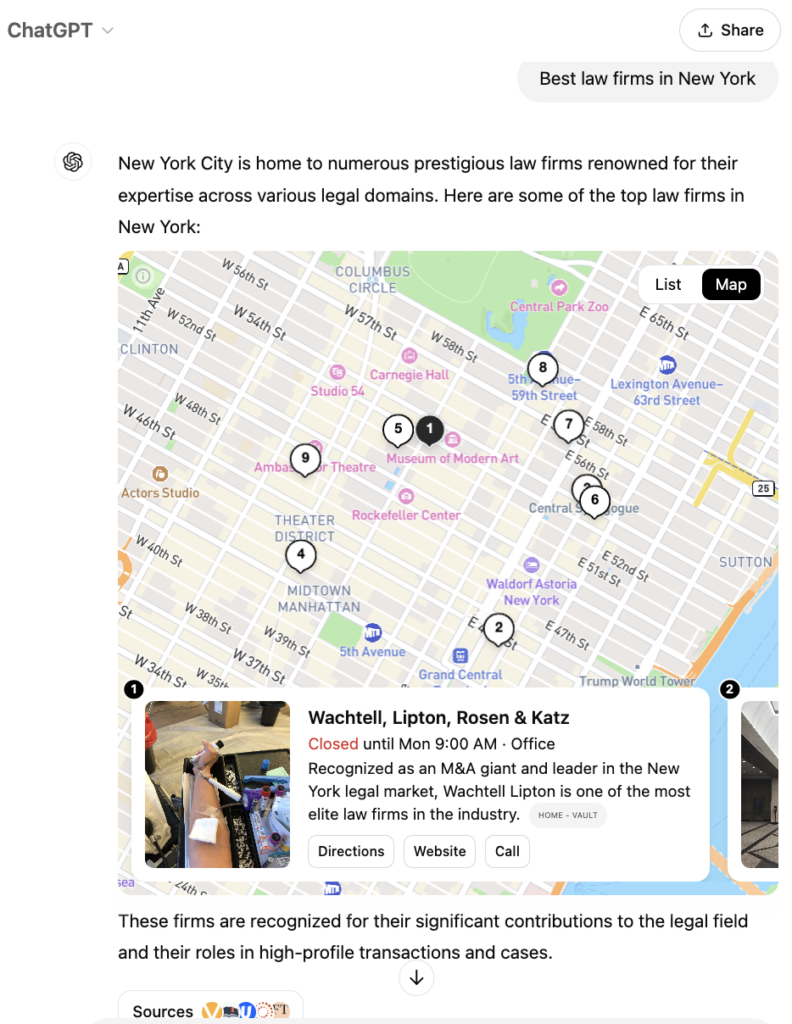
For example, if you run a law firm with offices in different cities, each location should have its own page with details. When someone asks, “What’s the best law firm in New York?”, you want your New York office to be a clear, relevant match, not ignored by ChatGPT.
Get Listed in Trusted Directories and Certifications
The final piece is listings in trusted directories, like chambers of commerce, government databases, or official certification bodies. Industry directories matter just as much. For example, platforms like Angi (formerly Angie’s List) for contractors, Yelp for local services, or Capterra for tech companies.
How ChatGPT Chooses Which Websites to Mention
One thing most people miss is that ChatGPT doesn’t “rank” websites in the traditional way the same way Google does. It doesn’t just pull the top 10 results and reshuffle them, and then when you click second page, it gives you 10 more results. Instead, it looks for sources that are easy to trust, understand, and quote.
That means your content needs to do three things:
- Answer the question directly
- Sound neutral
- Be structured with clear sections, definitions, and short explanations
For example, if someone asks “What is SEO?”. ChatGPT is far more likely to pull from a website that gives a clean, 2–3 sentence definition right away. That’s why Wikipedia is quoted so often.
What Doesn’t Work for ChatGPT Optimization
Some old SEO tactics just don’t hold up in AI search. Things like keyword stuffing, low quality surface-level content, clickbait headlines won’t help. AI systems are much better at filtering out low-quality content, if it doesn’t genuinely answer the question or provide useful insight, it’s unlikely to be recommended.
Also, when it comes to the content structure. What doesn’t work as well:
- Long intros before getting to the point
- Overly clever or vague wording
- Dense blocks of text with no structure
ChatGTP wants a fast clear answer, so it can quote it and provide a link as a reference.
Stop Chasing Rankings and Start Becoming the Answer
At the end of the day, the shift from SEO to GEO is not as dramatic as it sounds. SEO was about rankings and clicks, ChatGPT optimization is more about answers to right questions. It’s less about “how do I rank #1?” but more about “would anyone actually quote this?”, including ChatGPT.
So if your content feels useful, credible, safe, and easy to understand, you’re already on the right track. If it sounds like it was written just to rank, well, even ChatGPT can smell that from a mile away.