Negative reviews are part of every business, but how you respond to them is what matters. In fact, many customers don’t just read the complaint, they also evaluate how your business handles it. Professional response can build trust, demonstrate accountability, and even convert a dissatisfied customer into a loyal one. Below are essential principles to follow when replying to negative reviews, with real examples of how to write your responses.
Best Practices for Responding to Negative Reviews
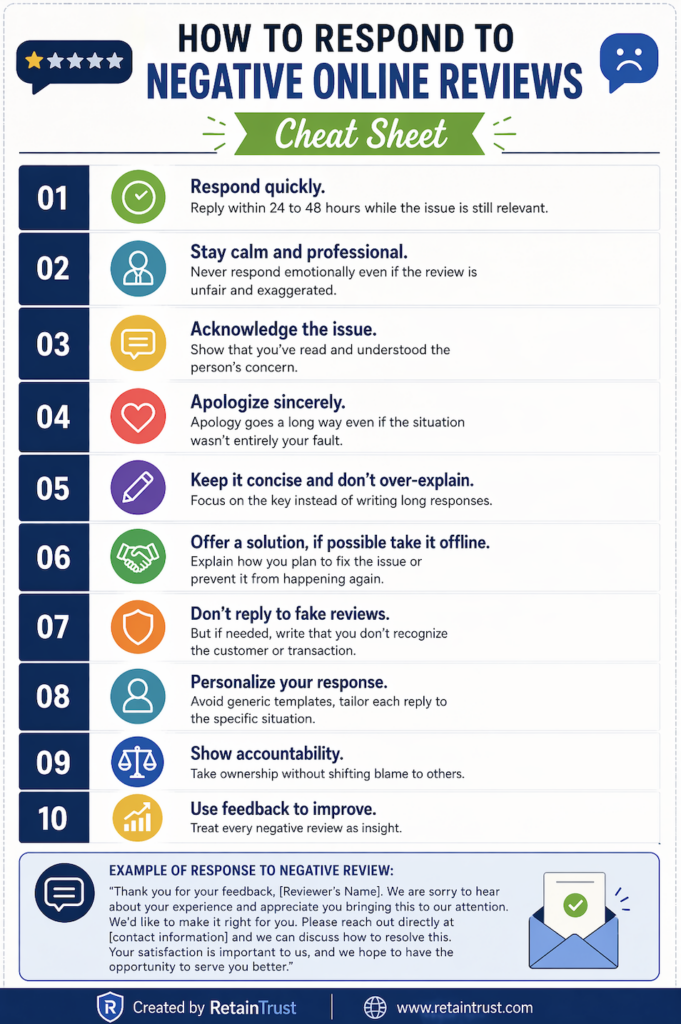
- Respond quickly. Reply within 24 to 48 hours while the issue is still relevant.
- Stay calm and professional. Never respond emotionally even if the review is unfair and exaggerated.
- Acknowledge the issue. Show that you’ve read and understood the person’s concern.
- Apologize sincerely. Apology goes a long way even if the situation wasn’t entirely your fault.
- Keep it concise and don’t over-explain. Focus on the key instead of writing long responses.
- Offer a solution, if possible take it offline. Explain how you plan to fix the issue or prevent it from happening again.
- Don’t reply to fake reviews. But if needed, write that you don’t recognize the customer or transaction.
- Personalize your response. Avoid generic templates, tailor each reply to the specific situation.
- Show accountability. Take ownership without shifting blame to others.
- Use feedback to improve. Treat every negative review as insight.
Cheat Sheet on How to Respond to Negative Reviews
Understanding the Psychology Behind Negative Reviews
Negative reviews have significant psychological influence over consumer behavior towards your business. It is estimated that negative reviews can lower web traffic and cause over 30% loss in revenue.
Studies in consumer behavior show that negative experiences leave a deeper impression than positive ones. This disparity leads dissatisfied customers to write negative reviews seven times more frequently and more likely than satisfied ones. Remarkably, a single negative review can carry more weight than forty positive ones. This phenomenon, called “negativity bias”, highlights how people are more inclined to remember and be affected by negative events and feedback.
Common Types of Negative Online Reviews
Negative online reviews can be categorized in different ways, often depending on the type of the complaint, the tone of the review, reviewer intent, and even the person writing style and personality. Here are some common types of negative online reviews:
- Product or Service Complaints. Reviews focusing on defects, malfunctions, poor product, not right expectations or capabilities.
- Customer Service and Support Complaints. Reviews mentioning poor interactions with employees or problems not being addressed satisfactorily or timely. Can describe complex interactions, misinterpretations, disagreements, policy complaints, service delivery, or simply someone having a bad day.
- Delivery and Logistics Complaints. Reviews focusing on items arriving later than expected, wrong address, broken, or in poor condition, or complaints about receiving the wrong or incomplete order.
- Value for Money Complaints. Reviews stating that the product or service is not worth the cost or comments about charges that were not expected, poor transparency in pricing or expectations.
- Misleading Advertising. Complaints about products or services not living up to promotional materials or what being promised.
- User Experience Complaints. Comments about difficult ordering or service processes or reviews focusing on technical issues or poor design.
- Cleanliness and Maintenance Complaints. Concerns about cleanliness issues, health related, safety, poorly maintained facilities or equipment.
- Wait Time Complaints. Reviews mentioning excessive waiting times and delays for service, delivery, or support.
- Policy, Returns, and Refunds Complaints. Comments about unfair, or not being able, or difficult to return, get refund, or exchange.
- Experience-Based Complaints. Reviews focusing on the reviewers dissatisfaction, can be reasonable or unreasonable, sometimes subjective. Also, comments influenced by anger, frustration, or disappointment.
- Spam or Malicious Reviews. Bad actors writing misleading reviews, often posted by competitors, disgruntled employees, spammers, scammers, people promoting other services, and “trolls” that leave comments meant to provoke or upset rather than provide constructive feedback.
In conclusion, understanding the various types of negative online reviews helps businesses navigate and address customer feedback effectively. It gives opportunities to leave the review as is and try to respond, or flag and report it if the review violates network’s guidelines.
What Types of Reviews Raise “Red Flags” Among Customers?
Most people are generally reasonable, if a negative review doesn’t raise serious concerns, they are still likely to make a purchase. For example, a lack of return policy can be a major issue, but dissatisfaction with a product’s color is often seen as a personal preference and can even reassure potential buyers that the product itself is fine. The same applies to the travel and restaurant industries. Issues like pest infestations or food poisoning are major red flags for most customers. However, complaints about the taste of the food or view from the window are usually not as concerning to potential customers.
Which Negative Reviews Should Companies Address and Respond To?
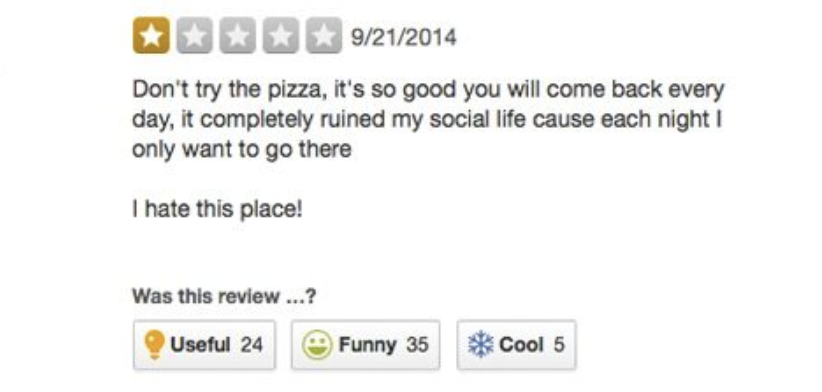
When customers research businesses and product they want to purchase, it’s important for them to find diverse opinions from previous customers, including negative reviews that offer constructive feedback without raising major concerns. Even better if business publicly responded to these reviews providing transparency and a commitment to improvement. According to study, 90% of customers more likely to overlook a negative review is business responded, and 93% people read business responses to reviews. Also, negative reviews often don’t hurt sales when they are outweighed by positive feedback, strong online reputation, and an overall high ratings across various networks.
Optimal Response Times for Negative Reviews
When customers leave bad reviews, they are often expressing frustration or dissatisfaction with the product purchased or service provided. Responding fast provides businesses an opportunity to address these issues while they are still top of mind. Delaying a response can prolong customer disappointment and reflect poorly on the company’s customer service. It is recommended to reply as soon as possible, ideally within 24 hours. And waiting longer than 48 hours risks missing the opportunity window to resolve the customer’s concerns effectively and maybe even making them to take down the review.
A great example of how a fast response can turn a negative experience around happened on Twitter. A customer posted that the air conditioning in a local coffee shop was set too high making the space extremely cold. The brand’s social media manager spotted the tweet in real time, called the store, and asked staff to adjust the temperature. Moments later, the manager Tweeted publicly with a single word: “Done!” … The customer was more than happy that her concern was resolved while she was still sitting there enjoying coffee. It transformed a minor complaint into a positive brand experience.
Common Mistakes to Avoid When Responding to Negative Reviews
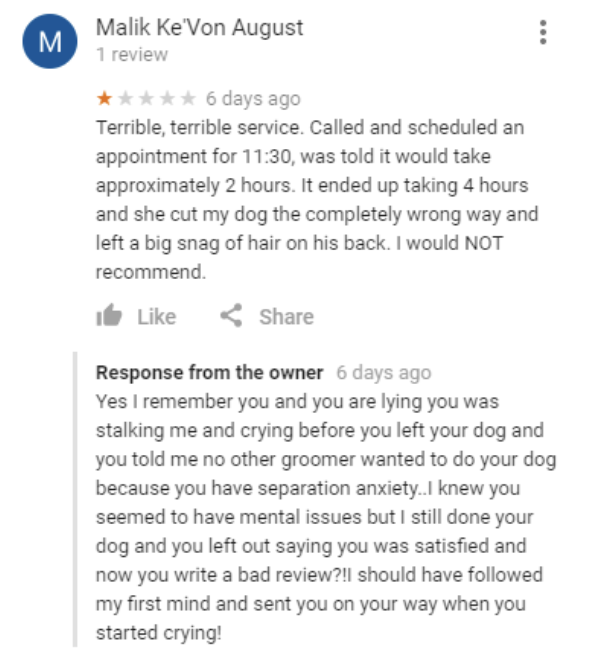
Some mistakes in responding to online reviews can escalate the situation and make it worse:
- Being Too Defensive or Argumentative. Avoid responding defensively or even arguing with the reviewer. This can escalate the situation and backfire.
- Ignoring the Review or Concerns Presented. Don’t ignore negative reviews. Not responding makes it seem like you don’t care about customer feedback and improving.
- Not Acknowledging the Issue. Failing to acknowledge the reviewers concerns can come off as dismissive. Make sure to read carefully, understand the problem and recognize the issue they raised before offering a solution.
- Using Generic Language. Avoid copy and paste generic responses. Personalized replies show that you value each customer’s feedback.
- Using AI or Bots for Responses. Over time, people have learned to distinguish between genuine writing and content generated by AI platforms.
- Not Apologizing. Even when the issue wasn’t your fault at all, offering a sincere apology shows empathy and a commitment.
- Writing Long Responses. Keep your response concise and focused. Long writings can dilute your message and lose the reader’s interest.
- Not Providing a Solution. Not only apologizing, but offering a clear solution or explanation will show proactive steps to resolve the situation.
- Taking Too Long to Reply. Delayed responses can frustrate the reviewer further and suggest a lack of interest and urgency to their concerns.
- Using Dismissive or Negative Language. Avoid using negative, aggressive, dismissive, or sarcastic language. Keep it professional in your replies even if the reviewer seem not rational or unreasonable.
- Not Being Professional. Stay professional even when getting unreasonable, rude, or ridiculous feedback.
- Lying, Avoiding Answers, and Blaming Others. Take the ownership for the response, don’t try to blame others like vendors, partners, distributors. And never try to avoid answers or lie.
- Publicly Discussing Sensitive Details. Avoid discussing sensitive or personal details publicly. Offer to take the conversation offline to protect the reviewer’s privacy and handle the issue more effectively.
- Don’t Reply to Fake Reviews. And don’t do any of the steps above for fake Reviews. All fake reviews should be flagged and reported. You might be tempted to leave a sarcastic reply to such reviews, but future customers may not understand your tone and might mistake the fake review for a genuine one, thinking you are responding negatively to a legitimate complaint.
By avoiding these mistakes, you can write effective replies when trying to respond to negative reviews that demonstrate your commitment to customer satisfaction and help maintain your business online reputation.
Why Businesses Should Avoid Responding to Fake Reviews
When it comes to fake reviews, the best way to handle them is to report them to the network.
Responding to fake reviews can be more harmful than beneficial for many reasons. Replying to a fake review can inadvertently add it legitimacy, making it appear credible to others, it will also add value to it and potentially move it higher on a review network and search engines. When a business replies, it might signal to potential customers that the review has some merit, even if it’s totally fake.
In some cases, responding to fake reviews can escalate the situation, particularly if the review is posted by a competitor or someone attempting extortion. It may trigger additional fake reviews or hostile replies, turning a single incident into an ongoing conflict.

Should You Use Humor When Responding to Negative Feedback?
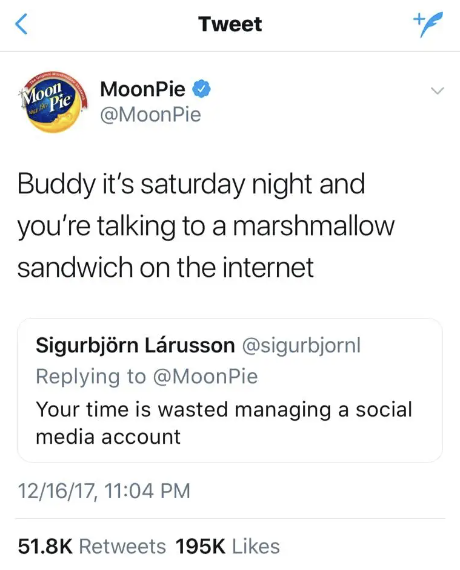
Occasionally, responding with humor or wit to social posts or negative feedback can be effective, but caution is advised because it carries risk. Avoid emotional reactions and consider asking professional advice before posting reply. In addition, try to maintain a respectful tone, even when faced with absurd ridiculous feedback or comments.
Examples on How to Reply to Negative Reviews
Here some examples of writing professional responses to negative online reviews.
Example of Standard Reply to a Negative Review:
“Thank you for your feedback, [Reviewer’s Name]. We are sorry to hear about your experience and appreciate you bringing this to our attention. We’d like to make it right for you. Please reach out directly at [contact information] and we can discuss how to resolve this. Your satisfaction is important to us, and we hope to have the opportunity to serve you better.”
Example of Shorter Reply to a Negative Review:
“Thank you, [Reviewer’s Name], for your feedback. We are sorry for your experience and appreciate for bringing this to our attention. Please contact us at [contact information] so we can discuss resolving this. We value your opinion and hope to serve you better in the future.”
Example of Reply to B2B Related Negative Review:
“Thank you, [Reviewer’s Name], for your feedback. We apologize for your experience and appreciate you raising this issue. Please reach out to us directly at [contact information] so we can work together to resolve this matter. Your satisfaction is our priority, and we look forward to improving our service for you in the future.”
Example of Reply to Negative Review Regarding Shopping Experience:
“Thank you for your feedback regarding your recent shopping experience with us. We are sorry to hear about your dissatisfaction and appreciate you bringing this to our attention. Please reach out to us directly at [contact information] so we can address and assist you better. Your satisfaction is important to us, we are committed to improving your experience in the future.”
Example of Reply to Negative Review Regarding Restaurant or Dining Experience:
“Thank you for your feedback regarding your recent dining experience. We are deeply sorry to hear about your disappointment and appreciate you bringing this to our attention. Please contact us directly at [contact information] so we can address and resolve this issue promptly. Your satisfaction is important to us, and we are committed to improving your experience with us in the future.”
Example of Reply to Negative Review Regarding Hotel or Lodging Experience:
“Thank you for your feedback regarding your stay with us. We apologize for any dissatisfaction you experienced during your visit and appreciate you letting us know. Please reach out to us directly at [contact information] so we can address your concerns promptly. Your satisfaction is our priority, and we are dedicated to improving your experience with us in the future.”
Example of Reply to Negative Review Regarding Service Provided:
“Thank you for your feedback regarding our service provided. We apologize for any issues you experienced and appreciate you letting us know. Please contact us directly at [contact information] so we can address your concerns. Your satisfaction is our priority, and we are committed to improving our service to ensure a better experience for you in the future.“
Example of Reply to Negative Review Regarding Product Quality
“Thank you for your feedback regarding [product purchased]. We apologize for any disappointment you experienced with the product and appreciate you bringing this to our attention. Please contact us directly at [contact information] so we can address your concerns promptly. Your satisfaction is important to us, and we are committed to improving our products to meet your shopping expectations”
Example of Response Reply to Negative Review Regarding Customer Service Experience and Interaction:
“Thank you for your feedback regarding your recent customer service experience. We apologize for any issues you encountered and appreciate you bringing this to our attention. Please contact us directly at [contact information] so we can address your concerns promptly. Your satisfaction is important to us, and we are committed to improving our customer service experience in the future.”
By applying these examples when responding to reviews, you can effectively address negative feedback and hopefully convert a dissatisfied customer into a loyal one.
Stop Managing Reviews. Start Managing Perception.
Treat every negative review as a public performance and not a private conversation. Your reply isn’t just for the reviewer, it’s for every future customer researching your business before buying. Stay fast, calm, and professional. Your online reviews is the last piece of the puzzle what turns visitors into customers.