
Trustpilot reviews can be removed if they violate Trustpilot’s guidelines. For example, if they are fake, contain personal data, or use inappropriate language. Businesses can claim their Trustpilot account and flag reviews for removal. However, they cannot remove reviews directly… if a review violates the guidelines, it must be reviewed and removed by the network’s moderation team.
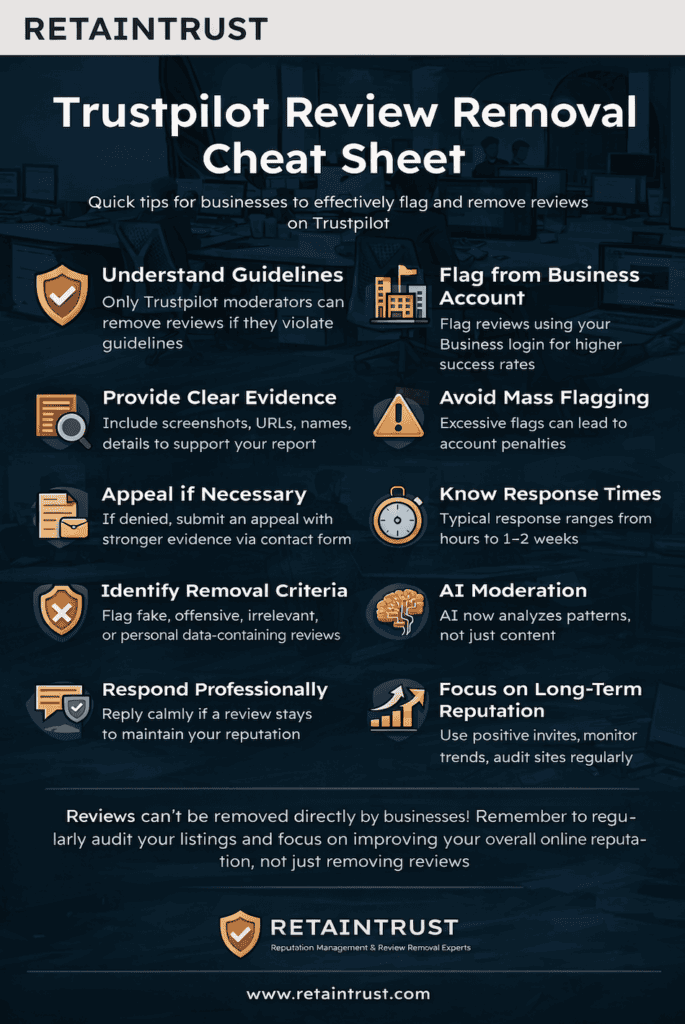
Reporting and Removing Trustpilot Reviews
There are a few ways to flag and request the removal of negative Trustpilot reviews that may violate the platform’s rules.
Flag Trustpilot Reviews as a User or Consumer:
To start the process, you must be signed in to your Trustpilot account. Then follow the next steps:
- Find the review in question
- Click “Flag” link next to it
- Log in to your consumer account
- Choose the reason why you are flagging the review
- Provide more details if asked during the next steps
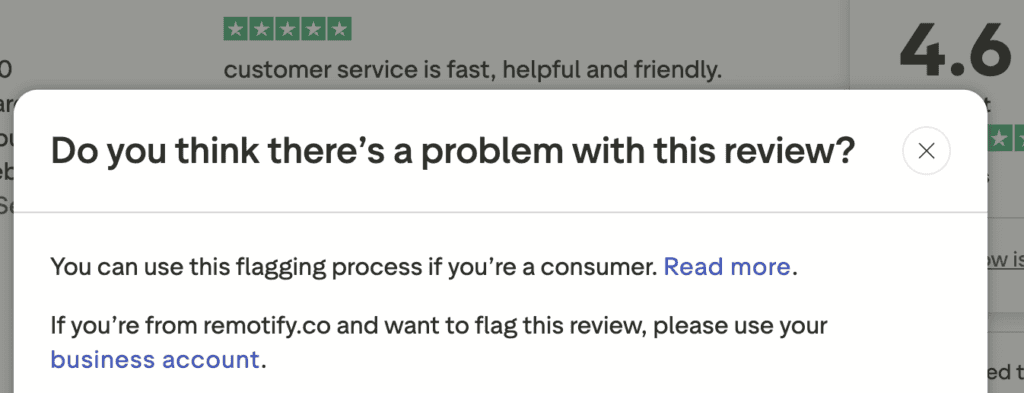
It’s not ideal to report reviews as a consumer, the chances of successfully having a review taken down are low. The network encourages businesses to claim and use their Trustpilot business account to flag and report unfair reviews.
Flag Trustpilot Reviews as a Business:
You need to have Trustpilot Business Account and report from there following the next steps:
- Create your Trustpilot Business Account and claim your business
- Log in to your Business Account
- Go to “Reviews” section for your business
- Locate the review in question and click “Flag” icon next to it
- Chose the reason why you flagging the review
- Wait for decision, if Trustpilot decides to keep the review, you should escalate it by clicking “Investigate” button
Visual Guide to Reporting Trustpilot Reviews
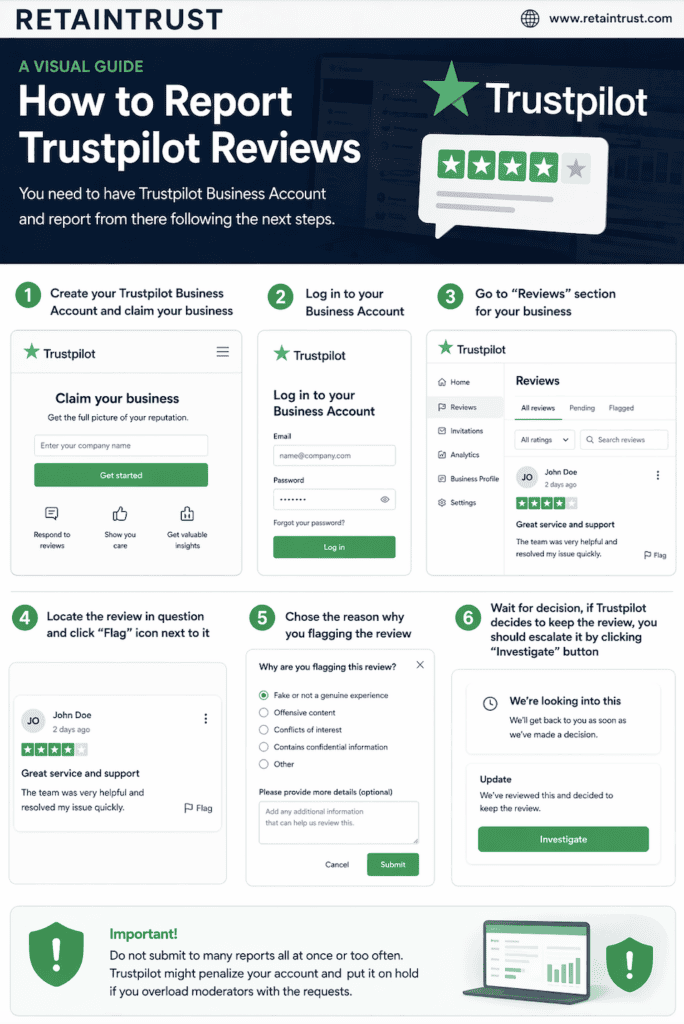
Important! Do not submit to many reports all at once or way too often. Trustpilot might penalize your account and put it on hold if you overload moderators with the requests.
Penalties for excessive flagging of reviews are unique to Trustpilot and not common for other networks. For example, on Google you can log in to your account and flag and report all reviews at once. But, on Trustpilot excessive flagging can result in penalties.
Appealing Flagged Reviews on Trustpilot
If any pervious attempt didn’t work, use contact form as a last resort to appeal Trustpilot’s decision.
- Go to contact form
- Select that you are a business
- Select a topic such as “problematic review”, “fake review”, or other
- Describe the issue and why the review should be removed
- Provide the URL of the review
- Attach screenshots and evidence to increase the chances of successful removal
Wait for the network to respond. Appealing can be the only way to get a real person talking to you.

How to Claim Your Business Profile on Trustpilot
If you need to create a Business Profile on Trustpilot, you will need to claim your business. If you use an email that matches your business website domain to claim your account, your setup is complete. But, if the email you used does not match your business website’s domain, you’ll need to verify your domain. This additional step is necessary to finalize your Trustpilot Business account setup. You can verify your domain using Google Search Console, Meta Tags, DNS, file upload, or other methods detailed here: https://support.trustpilot.com/hc/en-us/articles/360019072354-Verify-your-domain
It is also recommended to verify your company details:
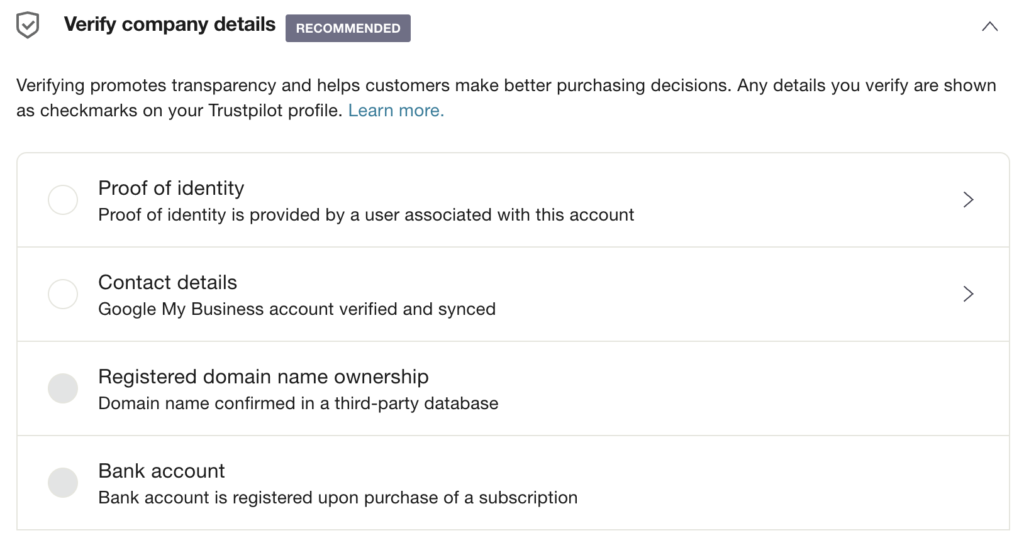
You can verify your company by synching your Google My Business (Google Maps) account, proof of identity, domain name ownership, or bank account. In general, verified businesses can have better support and response from Trustpilot.
Trustpilot Review Moderation Response Time After Flagging or Appealing
The response time from Trustpilot moderators after a review is flagged or appealed for removal can vary depending on specific circumstances. Typically, Trustpilot respond within a few business days. The exact time may depend on the volume of flagged reviews they are handling at the moment, the type of review you flagged and the evidence provided.
Based on our experience, on some occasions we received replies almost immediately within hours, and in other instances, it took 1 or 2 weeks. Occasionally, there was no reply at all, and the review mysteriously disappeared.
One observation, Trustpilot sales team can be very persuasive, often calling immediately after you flag the review.
Success Rate of Removing Flagged Trustpilot Reviews
There isn’t a straightforward “success rate” when it comes to flagging and reporting Trustpilot reviews. The outcome depends on different factors such as the content of the review, how well it’s written, and how it violates Community Guidelines.
In recent years, Trustpilot has changed and adjusted its approach to handling of the reviews and how it moderates it. It came after past criticisms of slow response times.
For instance, Trustpilot claims that now you don’t need to flag all the reviews you believe are fake. You can only flag one review and the network promise to reviews the patterns of illegal activity and remove all suspicious reviews. We can’t confirm or deny it, and prefer to report each review in old fashion way.
Tips for Successfully Flagging and Removing Negative Trustpilot Reviews
To improve your chances of removing negative content from Trustpilot and convincing moderators to take your side when flagging a review, follow these simple steps:
- Flag reviews from your claimed business account. It is more effective to flag reviews as a business rather than as a consumer.
- Don’t report too many reviews all at once or too often. Trustpilot actually penalize businesses for overloading moderators with requests.
- Provide detailed information. Include as much relevant information and evidence as possible to demonstrate how the review violates Trustpilot’s content guidelines for reviewers.
- Understand Trustpilot’s guidelines. Familiarize yourself with Trustpilot rules for reviews to navigate the reporting process more effectively, make stronger case, and increase your chances of success.
- Choose the right timing. Avoid emotional responses right after the review appeared, take your time, and focus on presenting clear evidence of how the review violates Trustpilot’s guidelines.
Trustpilot Features That Business Owners Should Watch Closely When Reporting Reviews
Trustpilot allows users to rate not only businesses but also individual domain names and websites. This means you don’t need a physical location or office, like you would on platforms such as Yelp or Google, to be listed and reviewed.
Because of this broad coverage, freelancers, designers, and content creators should regularly check whether their websites are listed on Trustpilot and whether any reviews need attention.
For example, I discovered a profile page for a blog I had back in 2007. It still exists on Trustpilot, even though I never created a profile and had no reviews. It appears the blog url have been added automatically in the past. It’s a reminder to search for both current and past business names, as well as any associated URLs.
Who Can Leave Reviews on Trustpilot?
Since Trustpilot open to any business that has a website, anyone can post on the network. The most common reviews come from the following audience:
- Consumers, people who has had a direct experience with a business or a website can post a review on Trustpilot. This includes purchasing a product, service, or any other interaction with a company management or employees. In order to put a review, users must create an account and verify identity.
- Website visitors, since Trustpilot allows any website to be on the network.
- Companies or businesses, anyone who interacted on a business level, B2B, such as client, vendor, parter etc.
- Former and current employees might provide some company insight information like feedback about management or work culture. Trustpilot was not build as a job review network like Glassdoor or Indeed, but occasionally you can see those types of reviews there as well.
- And, unfortunately, “bad actors”, people who spam or post fake reviews. Trustpilot have made significant improvements over the years to improve quality of reviews. Still, business owners must stay vigilant and report, flag those reviews to moderatos.
In the past, critics highlighted that scammers and some businesses exploited Trustpilot’s lack of control over new reviews, leading to a surge of fake reviews. In recent years, Trustpilot has updated its policies and took control on what type of content gets approved. Nevertheless, it is still advisable to audit reviews for your business, especially those posted before 2021.
Scammers still advertise their services to post negative fake reviews on Trustpilot:
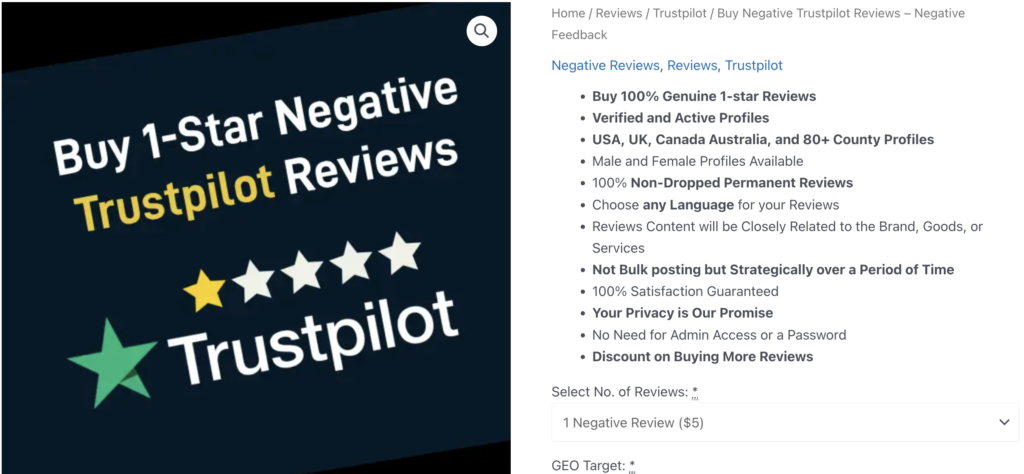
Even today scammers advertise their services and would write negative reviews for as little as $5 to damage your business. This types of ads appear frequently in online communities like Medium, Reddit, Quora and other online forums. The screenshot above I found by simply searching on Google and it came on the first page!
Trustpilot Commitment to Fight Fake Reviews
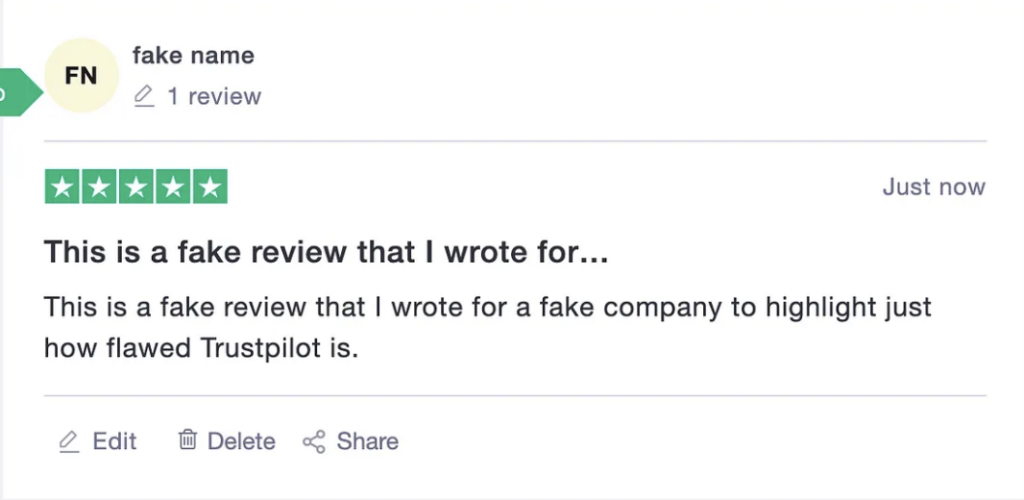
In response to criticism, Trustpilot has implemented several improvements to combat fake reviews and fraudulent content. According to their website, they have a dedicated team responsible for removing over 4 million fake reviews in 2024 alone. This team also moderates reviews flagged as questionable by business owners and community.
Trustpilot AI Moderation Updates in 2025–2026
Trustpilot has significantly expanded its use of artificial intelligence in review moderation. Today, all reviews are screened through automated systems, with generative AI playing a central role in detecting policy violations at scale. This shift has transformed how the platform enforces its guidelines, moving away from primarily manual review toward a more automated approach.
For businesses, this means that review removal is increasingly influenced by behavioral signals rather than just the content of a review. Trustpilot’s systems analyze patterns such as account activity, IP data, and reviewer history to identify suspicious behavior. As a result, the process has become more complex and less predictable, requiring a more strategic and evidence-based approach when flagging or appealing reviews.
Does it mean all fake reviews will be detected by AI and removed? Probably not. That’s why it is advised to keep an eye on Trustpilot reviews as they come.
Strategies for Managing and Removing Negative Trustpilot Reviews
If you receive a negative or unfair review on Trustpilot, start by determining if it came from a real customer. Reviews from individuals who never done business with you are fake and should be immediately reported to the network.
For reviews from real customers, analyze them to decide what to do next. You can try to resolve the issue offline and hope the customer will take it down or write a better one. Or you can respond politely online, demonstrating your commitment to improvement. If you believe a review violates Trustpilot’s Community Guidelines, report it to moderators and try to have it removed.
Managing your reviews is critical to maintaining a strong reputation and star ratings on Trustpilot, even when you receive negative feedback. Ignoring review management from the beginning can lead to more significant issues in the future, making it harder to catch up.
Next, we’ll discuss how to flag and report reviews you believe are fake or violate Trustpilot’s rules.
Which Trustpilot Reviews Can Be Reported and Removed?
Trustpilot established Guidelines for Reviewers to maintain the integrity and usefulness of reviews. Reviews must be real, reflecting the reviewer’s own experiences, and relevant to the business or product being reviewed. They must be respectful, avoiding offensive language or personal attacks, and ensure privacy by not including personal information about others without consent. Additionally, reviews must comply with applicable laws and regulations.
Summary of Trustpilot’s Review Guidelines
- Reviews must reflect real genuine experiences within the past 12 months.
- Keep receipts or documentation in case verification is needed.
- Write about your own experiences.
- Be respectful and avoid harmful, hateful, discriminatory, defamatory, or obscene content.
- Double check that your review is posted on the correct business profile page.
In addition, Trustpilot has implemented measures to detect and remove fake or fraudulent reviews.
What to Do If Trustpilot Denies Your Request to Remove a Review
If Trustpilot rejects your request to remove a review, here are a few steps you can take:
- Use the “Contact Us” form and write an appeal, but this may not significantly increase your chances of removal.
- Reply to the Review. If the review stays, respond on behalf of your company. Your response might encourage the reviewer to reconsider and possibly rewrite or completely remove the negative content.
To summarize, if Trustpilot denies your request to remove a review in question and you still believe it violates guidelines, consider appealing after a few weeks with additional evidence to strengthen your case. If the review remains, respond to it professionally on behalf of your company.
Using Trustpilot’s “Invite Past Customers” Feature

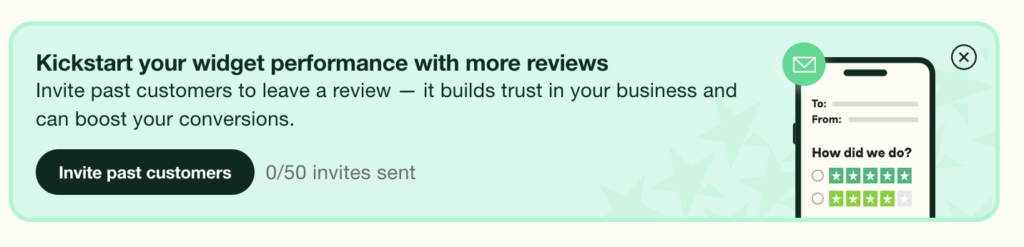
Trustpilot provides tools and widgets that allow businesses to show their profiles, reviews, TrustScore, and collect feedback directly from their websites, email campaigns, and social profiles. Utilizing these tools enables businesses to prompt satisfied customers to leave positive reviews. Additionally, from your business profile, you can invite loyal customers via email to share their reviews. With free access, you can invite up to 50 contacts.
Leveraging Trustpilot’s Analytics Tools
Trustpilot network offers analytics tools that provide businesses with insights into their business page and review performance. By analyzing trends, identifying common patterns in feedback, and tracking changes in customer sentiment, businesses can make decisions based on data to enhance their reputation and reviews.
Also, it gives you data on conversions when you send invitation emails to your customers and place widgets on your site that show reviews and collect feedback. With that knowledge, you can optimize your performance and review facilitation.
How Trustpilot Has Evolved Over Time
Trustpilot has evolved from a collection of websites that anyone could review into a more structured platform built around businesses. Today Trustpilot reviews are more closely monitored, and the system relies on better rules and automation. For business owners, this means less randomness, but also a need to be more precise when managing and reporting reviews.